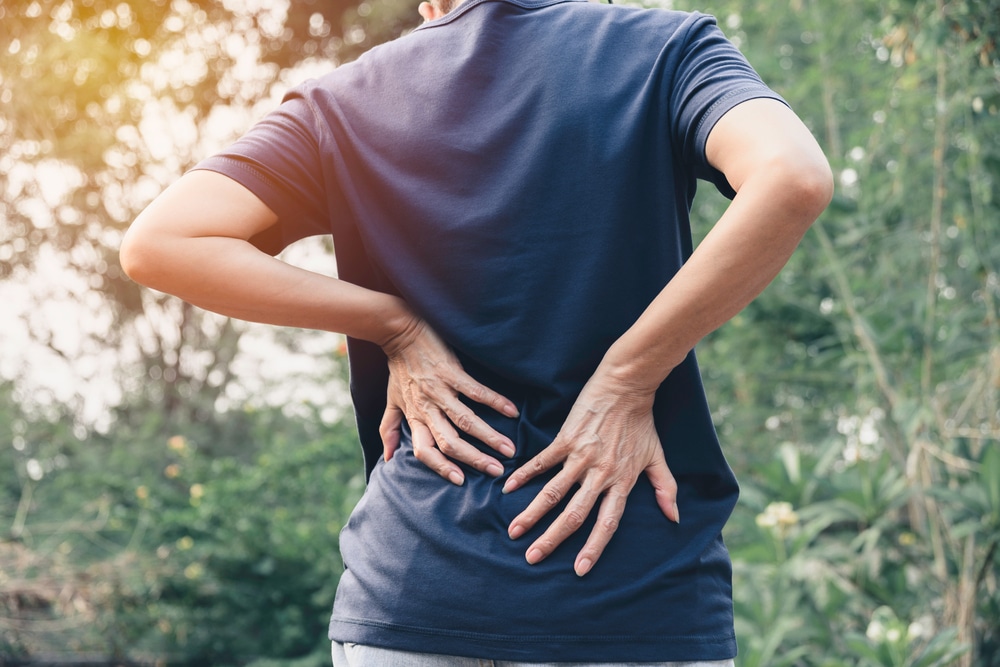
Lower back pain, leg pain, or sciatica caused by a bulging or herniated lumbar disc can make daily movement difficult and limit activity. When symptoms persist despite non-surgical care, relieving pressure on the affected nerve while minimizing recovery time becomes a key priority. Minimally invasive lumbar microdiscectomy removes the portion of the disc pressing on the nerve through a small incision, helping reduce pain while limiting disruption to surrounding tissue.
Saville Spine Institute in Palm Beach Gardens, FL, is recognized for its expertise in minimally invasive spine procedures, including lumbar microdiscectomy. Led by experienced spine specialists committed to staying up to date with the latest research, the practice is regarded as a trusted authority in delivering precise, patient-focused treatment for lumbar disc herniation.
What Is a Minimally Invasive Lumbar Microdiscectomy?
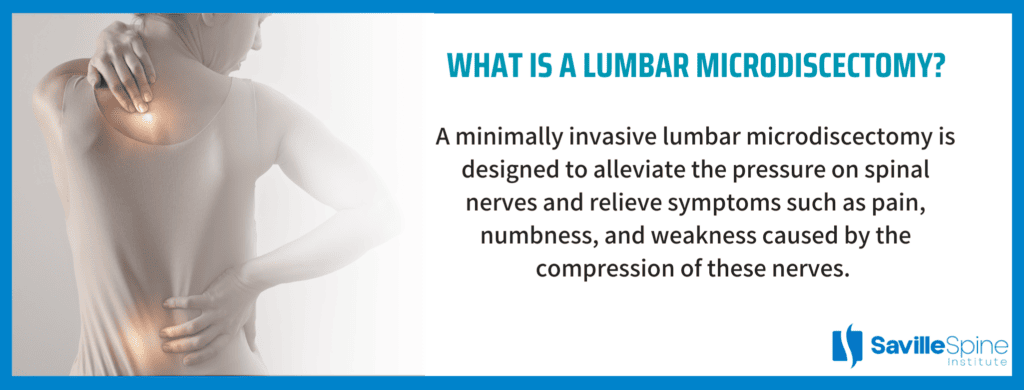
A minimally invasive lumbar microdiscectomy is a surgical procedure used to treat specific spinal conditions affecting the spine’s lumbar (lower back) region.
This surgical technique is designed to reduce pressure on spinal nerves and relieve symptoms such as pain, numbness, and weakness caused by nerve compression.
Most surgeons prefer a minimally invasive approach to lumbar microdiscectomy compared to traditional open surgery for the following reasons:
Minimally Invasive Lumbar Microdiscectomy vs. Conventional Surgery
A lumbar microdiscectomy may be performed to remove pressure from the spinal nerve by removing the parts of the disc that are herniated and pinching the nerve. Historically, this surgery requires a large incision to be made on the back, and muscle tissue must be removed to access and operate on the bulging or herniated disc. Because of the volume of tissue affected by such an operation, recovery time can extend for months.
However, minimally invasive techniques allow trained surgeons to perform the same procedure with only a single small incision measuring ½ inch. A small tube is inserted and positioned without significantly impacting surrounding muscle tissue. Surgery is performed by skillfully manipulating microsurgical tools through this access tube under a microscope.
The result is the same spinal nerve relief but with far less inflammation of surrounding tissue, making post-operative recovery substantially less painful and time-consuming for our patients. Minimally invasive procedures also show lower complication rates than conventional procedures.
When Is Minimally Invasive Lumbar Microdiscectomy Recommended?
Lumbar microdiscectomy is recommended in specific cases of lumbar spine conditions, particularly when conservative treatments have failed to provide relief or when the severity of the spinal problem requires surgical intervention.
It is most commonly used and recommended for the following situations:
Good Candidates for Microdiscectomy
Microdiscectomy can be highly effective for certain individuals experiencing specific lumbar spine conditions. Good candidates for this procedure typically exhibit the following characteristics:
It’s important to note that the decision to undergo a lumbar microdiscectomy should be made in consultation with a qualified spine specialist. They will thoroughly evaluate the patient’s condition and medical history to determine if surgery is appropriate.
Why Choose Saville Spine Institute for Minimally Invasive Lumbar Microdiscectomy in Palm Beach Gardens, FL?
Saville Spine Institute offers a distinct approach to minimally invasive lumbar microdiscectomy in Palm Beach Gardens, FL, by combining technical precision with highly individualized care. Each case is evaluated in detail to confirm that nerve compression from a disc herniation is the true source of symptoms before surgery is considered.
The practice focuses on limiting tissue disruption while achieving complete nerve decompression, helping reduce recovery time and post-operative discomfort. Patients also benefit from clear communication, careful surgical planning, and coordinated follow-up care. We aim to create a streamlined experience centered on restoring comfort, mobility, and confidence in daily movement.
Frequently Asked Questions About Minimally Invasive Lumbar Microdiscectomy
The duration of a minimally invasive lumbar microdiscectomy can vary depending on several factors. On average, though, the surgery typically takes 30 minutes to 1 hour to complete.
Pain and discomfort after a lumbar microdiscectomy are common experiences, but they are typically manageable and tend to improve as you recover.
Your doctor will prescribe pain medications to help manage your discomfort. You’ll likely start with stronger pain relievers immediately after surgery and then transition to milder medications as your pain decreases.
Recovery time from a lumbar microdiscectomy can vary from person to person. However, here is a general timeline of what you can expect during your recovery:
- Immediate post-operative period (days 1-2): After the surgery, you will spend some time in the recovery room for monitoring. You may be encouraged to start walking and moving around with assistance on the day of surgery. You will be discharged from the facility when your doctor determines that you are stable and ready to go home, usually within the day of the surgery.
- First few weeks (weeks 1-2): During this period, you should continue to rest and gradually increase your activity levels as advised by your surgeon. Avoid strenuous activities, heavy lifting, and bending at the waist. Physical therapy may be recommended to help you regain strength and mobility. Pain and discomfort will gradually decrease, but it’s normal to experience some lower back soreness. You may be able to return to light, sedentary work within a week or two, depending on your job requirements.
- Weeks 2-4: Pain medication requirements usually decrease during this period. As your condition improves, you may be allowed to engage in more activities, such as walking, swimming, and gentle stretching. Some patients may begin to resume driving if they are no longer taking strong pain medications and can move comfortably.
- Months 2-3: By this stage, most patients experience significant improvement in their symptoms. You can gradually increase your physical activity and return to more strenuous exercises or work, but it’s essential to do so slowly and under your surgeon’s guidance. Continue any prescribed physical therapy sessions to aid in your recovery.
- Long-term recovery (months three and beyond): Full recovery may take several more months, and some residual discomfort or stiffness may persist. Your surgeon will schedule follow-up appointments to monitor your progress and discuss your long-term outlook.
According to studies, microdiscectomy has a high success rate (about 90%) and many patients experience significant symptom relief.
However, successful outcomes are often influenced by factors such as patient compliance with post-operative instructions and rehabilitation, overall health, and the presence of underlying medical conditions.
Patient Report
Here’s what one of our patients has to say about their minimally invasive lumbar microdiscectomy procedure:
“Dr Saville was highly recommended to me by friends in the medical field. I visited Dr. Saville at his new state-of-the-art office in Palm Beach Gardens. I was in excruciating level 10 pain and literally could not function in this condition. My MRI results revealed that I had a sequestered disk that broke off and was lodged in my spinal nerve. Dr Saville tried the conservative approach and administered a spinal epidural. Unfortunately the epidural could not control my pain and I had to opt for microdiscectomy surgery. Immediately after my surgery, my pain was completely gone! It was like a miracle had occurred. I am 1 month post-op and I feel great. Throughout the whole process, Dr Saville was in constant contact with me, checking on me regularly. His professionalism, incredible knowledge and concern for his patients shines through… I can’t thank Dr Saville enough for everything he has done for me. I was very fortunate to have Dr Saville perform my surgery”
Explore Solutions for Lower Back Pain Today
At Saville Spine Institute, we’re dedicated to ensuring you have a smooth journey from diagnosis to recovery. Our compassionate team is committed to answering your questions, addressing your concerns, and providing the support you need throughout your treatment. Contact us at (561) 630-3870 to book a consultation.