Skip to content


Lower back pain that radiates into the hip, leg, or foot can be a sign of lumbar radiculopathy (also known as sciatic nerve pressure or sciatica), a condition caused by pressure on a spinal nerve. Disc herniations, bone spurs, or degenerative changes in the lower spine can irritate the nerve, leading to sharp pain, numbness, tingling, or weakness that follows a specific nerve pathway. These symptoms can interfere with walking, standing, and everyday activities.
At Saville Spine Institute in Palm Beach Gardens, FL, board-certified spine surgeons provide comprehensive care for lumbar radiculopathy using both non-surgical and advanced surgical treatments when appropriate. The practice is known for its commitment to precise diagnosis and patient-focused care.
What Is Lumbar Radiculopathy?
Lumbar radiculopathy is a condition caused by irritation or compression of a nerve in the lower spine. When a lumbar nerve is affected, pain, numbness, tingling, or weakness can radiate from the lower back into the buttock, leg, or foot along the path of the nerve. Common causes include disc herniation, bone spurs, spinal stenosis, or degenerative disc changes.
Lumbar radiculopathy can range from mild discomfort to significant, activity-limiting pain. Each nerve has specific patterns of pain, and the location of pain and numbness in the legs will vary depending on which disc is herniated.
Lumbar Radiculopathy Symptoms
Common symptoms of lumbar radiculopathy include:
About 80% of disc herniations will resolve with conservative treatment, but surgery is an option if pain lingers. Keep in mind that disc herniations can be an emergency, and if you notice weakness or loss of control in your legs, you should seek help urgently.
Treating Lumbar Radiculopathy
Saville Spine Institute may recommend any or all of the following treatments to patients with lumbar radiculopathy:
Physical Therapy
Physical therapy focuses on exercises and movement strategies that reduce nerve irritation while improving strength, flexibility, and posture. A structured program can help relieve symptoms, improve mobility, and increase tolerance for daily activities in patients with lumbar radiculopathy.
Epidural Injections
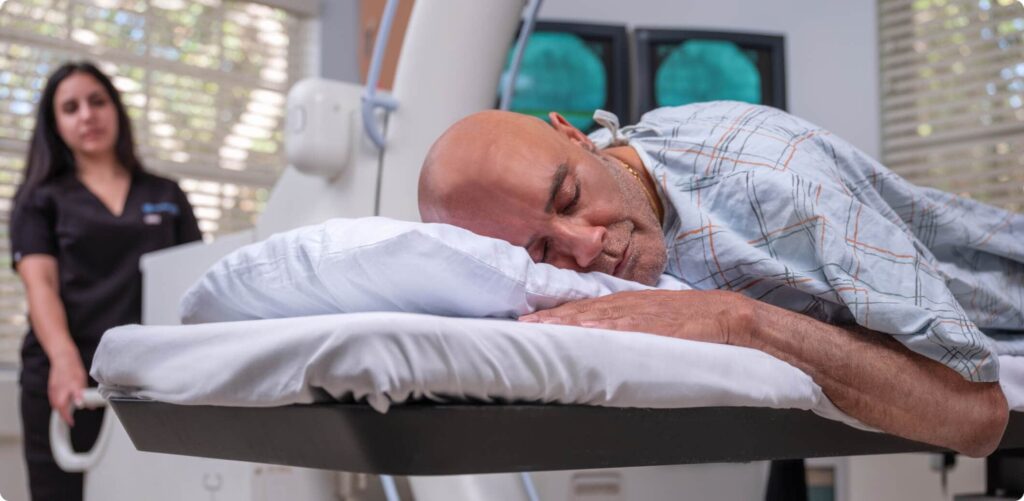
Epidural injections deliver anti-inflammatory medication directly around the irritated lumbar nerve to reduce swelling and pain. These injections may provide temporary relief and can be used to manage symptoms or support recovery while other treatments are considered.
Minimally Invasive Microdiscectomy
Minimally invasive microdiscectomy removes the portion of a herniated disc pressing on a lumbar nerve through a small incision. This procedure relieves nerve compression while limiting muscle disruption and supporting a faster recovery.
How Is Lumbar Radiculopathy Diagnosed?
Diagnosing lumbar radiculopathy involves determining which nerve is affected and what is irritating or compressing it. Your spine specialist will consider your symptoms, physical examination, and imaging findings together rather than relying on any single test.
The evaluation may include:
- Medical history: Your doctor will ask where the pain, numbness, or tingling travels, when it started, and what makes it better or worse.
- Neurological exam: Muscle strength, sensation, and reflexes for signs of nerve involvement.
- Movement testing: Certain movements and tests, such as the straight leg raise, may help determine whether a lumbar nerve is irritated.
- MRI: An MRI can show discs, nerves, and other soft tissues and help identify a herniated disc or spinal narrowing that may be compressing a nerve.
- X-rays: X-rays can reveal spinal alignment, loss of disc height, and degenerative changes.
- CT scans: A CT scan may be used when a more detailed view of the bones and spinal structures is needed.
Because imaging findings do not always explain a person’s symptoms, clinicians consider the results alongside pain location and the neurological examination to identify the likely source of the problem.
Why Choose Saville Spine Institute for Lumbar Radiculopathy Treatment in Palm Beach Gardens, FL?
Saville Spine Institute provides a focused, individualized approach to lumbar radiculopathy treatment in Palm Beach Gardens, FL, centered on identifying the precise source of nerve irritation. Rather than applying a one-size-fits-all plan, the team carefully correlates symptoms with imaging and physical findings to guide treatment decisions.
Patients have access to a full range of non-surgical options as well as minimally invasive procedures when nerve compression persists. Emphasis is placed on relieving leg pain, restoring movement, and helping patients return to normal activity with clear guidance, attentive follow-up, and care tailored to long-term spinal health.
What Can Cause Lumbar Radiculopathy?
Lumbar radiculopathy develops when a nerve root in the lower spine becomes irritated, inflamed, or compressed. Several spinal conditions can reduce the space around a nerve or place direct pressure on it.
Common causes include:
- Herniated disc: Disc material can extend beyond its normal position and press against a nearby nerve root.
- Spinal stenosis: Narrowing within the spinal canal or the openings where nerves exit can place pressure on lumbar nerves.
- Bone spurs: Changes related to spinal arthritis can create extra bone that reduces the space available for a nerve.
- Degenerative disc changes: As a disc loses height and changes over time, the openings around the nerve roots may become narrower.
- Spondylolisthesis: When one vertebra slips forward relative to another, it can narrow the space surrounding nearby nerves.
Identifying the specific cause of nerve irritation matters because the underlying problem, compression severity, and neurological findings can influence the most appropriate treatment.
Frequently Asked Questions
Find answers to some of the most common questions patients ask about lumbar radiculopathy below.
Epidurals work in two main ways. First, the injected fluid washes away inflammatory chemicals in the disc that irritate the nerve and cause pain. Second, the steroid helps reduce inflammation and swelling of the nerve caused by pinching.
No, unfortunately, the disc herniation won’t go back inside the disc. Your body may dissolve it over time, which is why most people improve with conservative treatment. If symptoms persist, surgery is an option.
A microdiscectomy is usually offered after 6 weeks of symptoms. After this point, the chances of spontaneous resolution are much lower. Occasionally, we will recommend surgery before this if the pain is severe or there are neurological deficits, such as weakness.
This is when a very large disc herniation pinches all of the spinal nerves. It can cause pain in both legs, weakness, urinary incontinence, and numbness in the saddle area. This is an emergency and requires surgery ASAP.
Recovery varies depending on the cause of the nerve compression and the severity of your symptoms. Many patients with a herniated disc improve over several weeks with conservative treatment, while others may require surgery if symptoms persist or worsen.
At Saville Spine Institute, we monitor your progress closely and recommend the treatment that best supports your recovery.
General low back pain typically involves the back itself, whereas lumbar radiculopathy occurs when a spinal nerve is irritated or compressed. In addition to back pain, lumbar radiculopathy often causes pain, numbness, tingling, or weakness that travels into the buttock, leg, or foot along the affected nerve.
Yes. Many cases of lumbar radiculopathy improve without surgery, particularly when caused by a herniated disc. Physical therapy, epidural injections, activity modification, and other conservative treatments are often effective. If symptoms continue or significant nerve compression develops, surgery may be recommended.
Most cases improve with appropriate treatment, but prolonged or severe nerve compression can sometimes lead to lasting weakness or nerve dysfunction. If you develop worsening weakness, difficulty walking, or changes in bowel or bladder function, you should seek immediate medical attention.
Activities that worsen your symptoms, such as heavy lifting, repetitive bending, twisting, or prolonged sitting, may place additional stress on the irritated nerve. Our team can recommend activity modifications based on your condition while helping you remain as active as possible during recovery.
Yes. Lumbar radiculopathy can recur, particularly if new disc degeneration or another source of nerve compression develops. Maintaining good spinal health, following your treatment plan, and addressing symptoms early may help reduce the risk of future episodes. If symptoms return, we can evaluate the cause and recommend appropriate treatment.
Physical therapy is often recommended after surgery to help restore strength, flexibility, and normal movement while supporting your recovery. The timing and duration of therapy depend on the procedure you have, your symptoms, and your progress during healing.
At Saville Spine Institute, we create a personalized recovery plan to help you safely return to your daily activities.
Find Sciatica Relief in Palm Beach Gardens, FL
Saville Spine Institute offers concierge-style treatment of lumbar radiculopathy. Contact us at (561) 630-3870 to book a consultation at our Palm Beach Gardens, FL, practice.