
Leg pain, heaviness, or cramping that worsens with walking and improves with sitting is a common sign of lumbar spinal stenosis. This condition occurs when age-related changes narrow the spinal canal and place pressure on the nerves that supply the legs. Many individuals notice symptoms return after walking a predictable distance, with temporary relief when leaning forward or resting, making everyday activities increasingly difficult.
Saville Spine Institute in Palm Beach Gardens, FL, provides comprehensive care for lumbar spinal stenosis, from non-surgical management to advanced, minimally invasive procedures when needed. Led by highly trained spine surgeon Dr. Philip Saville, the practice is recognized for its careful diagnostic approach and patient-focused care aimed at reducing nerve pressure, improving mobility, and restoring quality of life.
What Is Spinal Stenosis?
Spinal stenosis is a condition in which the spaces within the spine narrow, placing pressure on the spinal cord or nerves. In the lumbar spine, this narrowing is often caused by age-related changes such as arthritis, thickened ligaments, or disc bulging.
Lumbar Spinal Stenosis Symptoms
Patients with lumbar spinal stenosis may experience:
These symptoms usually get worse with standing or walking. Patients also often report pain at night because lying flat pinches the spinal canal more.
Lumbar Spinal Stenosis Treatment
Spinal stenosis treatment is driven by your symptoms. Broadly speaking, the goals are to reduce pressure on the spinal nerves caused by arthritis, ligamentous structures, and disc bulges. Initial treatment will include injections and therapy to see if you get any relief. If these simple treatments fail, we will discuss minimally invasive surgical options.
Saville Spine Institute may recommend any or all of the following treatments to patients:
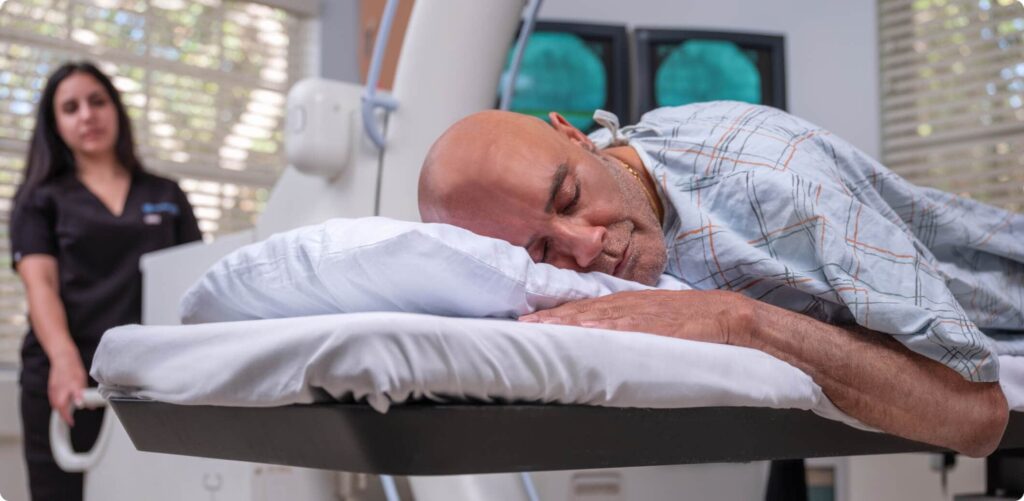
Epidural Injections
Epidural injections help reduce inflammation around compressed spinal nerves to relieve leg and back pain caused by spinal stenosis. While they can provide temporary symptom relief, their effectiveness often decreases over time, and they do not address the underlying narrowing of the spinal canal.
Physical Therapy
Physical therapy focuses on strengthening, flexibility, and posture to improve walking tolerance and overall function. While it does not reverse stenosis, it can help manage symptoms and increase endurance for daily activities.
Minimally Invasive Decompression
Minimally invasive decompression is the most common surgical treatment for spinal stenosis. It relieves nerve pressure by removing bone or ligament causing narrowing, using small incisions to limit tissue disruption and support faster recovery.
Minimally Invasive Lumbar Fusion
Minimally invasive lumbar fusion is recommended when spinal stenosis is accompanied by instability or scoliosis. The procedure stabilizes the spine while relieving nerve compression, helping prevent further slippage or progression of deformity.
Why Choose Saville Spine Institute for Lumbar Spinal Stenosis Treatment in Palm Beach Gardens, FL?
Patients choose Saville Spine Institute because we take a measured, patient-specific approach to lumbar spinal stenosis treatment in Palm Beach Gardens, FL.
Our team focuses on improving mobility while minimizing unnecessary intervention. Each patient receives a detailed evaluation to determine the exact cause of nerve compression and how symptoms affect daily function. Treatment plans are then built to match the severity of stenosis, ranging from targeted non-surgical care to minimally invasive procedures when needed.
The practice places strong emphasis on preserving strength, balance, and independence, with careful follow-up and rehabilitation guidance to help patients walk farther, move more comfortably, and maintain an active lifestyle.
Frequently Asked Questions
Here are answers to some of the most common questions patients ask about lumbar spinal stenosis.
The causes are multifactoral. Aging of the spinal discs leads to bulging and arthritis in the joints, as well as thickening of the ligaments. These factors together create narrowing of the spinal canal and pinching of the spinal nerves.
A decompression procedure will remove part of the lamina, the arthritic bone, and excess ligament. This recreates space for the nerves and relieves the pain.
This depends on your anatomy. If you have scoliosis or significant instability (spondylolisthesis), removing the stenosis will further destabilize your spine; in this case, a fusion is usually the best option for long-term success.
Find Relief From Lumbar Spinal Stenosis Today
Saville Spine Institute provides state-of-the-art concierge-style treatment of lumbar spinal stenosis. Book a consultation today by calling (561) 630-3870.