
Who Is a Candidate for Cervical Disc Arthroplasty? A Guide to Understanding Eligibility and Benefits
Cervical disc arthroplasty, or artificial disc replacement, is a cutting-edge surgical procedure designed to treat certain conditions affecting the cervical spine.
Unlike traditional spinal fusion surgery, this minimally invasive procedure preserves motion in the affected area, offering patients a more natural range of movement post-surgery. However, not everyone with a cervical spine condition can undergo this procedure.
In this blog post, we will discuss the ideal patient profile for cervical disc arthroplasty, the factors determining suitability, and the numerous advantages of this procedure. Whether you’re experiencing chronic neck pain or have been diagnosed with a cervical disc disorder, this guide will help you make an informed decision.
What is cervical disc arthroplasty?
Cervical disc arthroplasty is a surgical procedure aimed at replacing a damaged or degenerated cervical disc with an artificial one.
The cervical spine, located in the neck, is made up of seven vertebrae cushioned by discs that act as shock absorbers. When one or more discs become damaged due to spinal conditions, it can lead to significant pain, numbness, or weakness in the neck, arms, and shoulders.
This procedure not only alleviates these symptoms but also maintains the natural motion of the cervical spine, unlike spinal fusion, which limits mobility by fusing two or more vertebrae together.
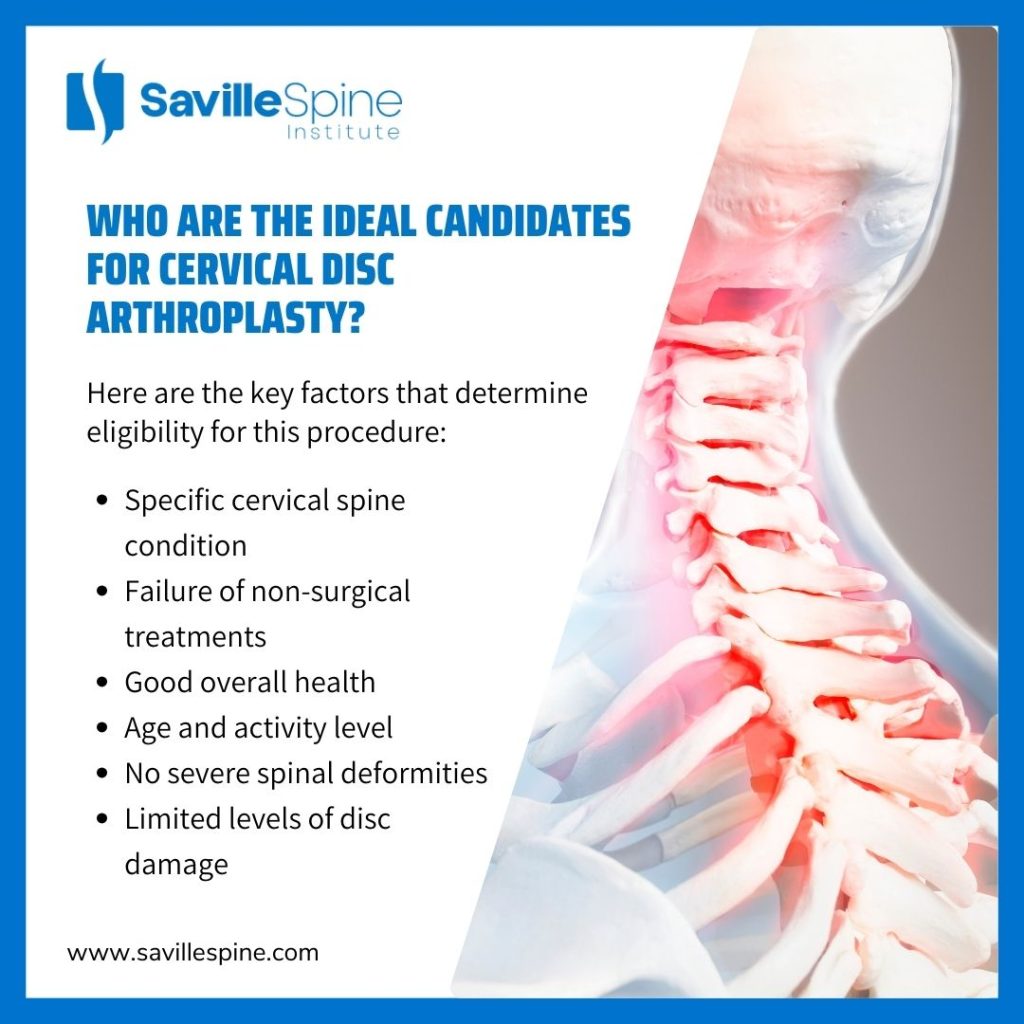
Who are the ideal candidates for a cervical disc arthroplasty?
Not everyone with neck pain or a cervical spine condition is a candidate for cervical disc arthroplasty. Here are the key factors that determine eligibility:
Specific cervical spine condition
The procedure is typically recommended for individuals diagnosed with:
- Degenerative disc disease (DDD): When the cushioning discs between vertebrae break down, causing pain and stiffness.
- Herniated disc: When the inner gel-like material of a disc leaks out and compresses nearby nerves.
- Cervical radiculopathy: When a pinched nerve in the cervical spine causes pain, tingling, or weakness in the arms.
- Cervical myelopathy: A condition where spinal cord compression leads to coordination and balance issues.
Failure of non-surgical treatments
Ideal candidates are those who have tried conservative treatments, such as physical therapy, medications, or steroid injections, without significant relief. Cervical disc arthroplasty is often considered when non-surgical options fail to improve symptoms.
Good overall health
Candidates must be in good general health to tolerate surgery and recover effectively. Certain medical conditions, such as severe osteoporosis, infections, or advanced arthritis, may disqualify someone from undergoing the procedure.
Age and activity level
While there is no strict age limit, younger and middle-aged individuals who lead active lifestyles are often better candidates. This is because preserving motion in the cervical spine is especially beneficial for those who engage in physical activities or jobs that require neck mobility.
No severe spinal deformities
Candidates should not have severe spinal deformities, such as advanced scoliosis or significant instability in the cervical spine, as these conditions may require alternative surgical approaches.
Limited levels of disc damage
The procedure is typically performed on one or two levels of the cervical spine. Patients with extensive multi-level disc degeneration may not be ideal candidates for cervical disc arthroplasty.
Bone quality
The artificial disc must be securely anchored to the vertebrae, which requires healthy, strong bone tissue. Conditions compromising bone quality, such as osteoporosis or severe osteopenia, can make the procedure less viable and increase the risk of complications such as implant loosening or subsidence (sinking of the artificial disc into the bone).
In cases of compromised bone health, alternative treatments such as spinal fusion may be considered instead.
What are the factors that may disqualify a patient for this procedure?
Certain conditions or factors may make someone ineligible for cervical disc arthroplasty, including:
- Severe osteoporosis: Weak bones may not support the artificial disc properly.
- Active infections: Any active infection must be treated before considering surgery.
- Advanced arthritis: Significant wear and tear on the facet joints may require alternative procedures.
- Allergy to implant materials: Patients with known allergies to metals used in artificial discs may need other options.
- Pregnancy: Pregnant individuals are typically advised to postpone surgery until after delivery.
- Obesity: Excess weight can put additional strain on the cervical spine, potentially impacting surgical outcomes.
What are the benefits of cervical disc arthroplasty?
Cervical disc arthroplasty offers several advantages over traditional spinal fusion, making it an attractive option for eligible candidates. Here are the key benefits:
Preservation of motion
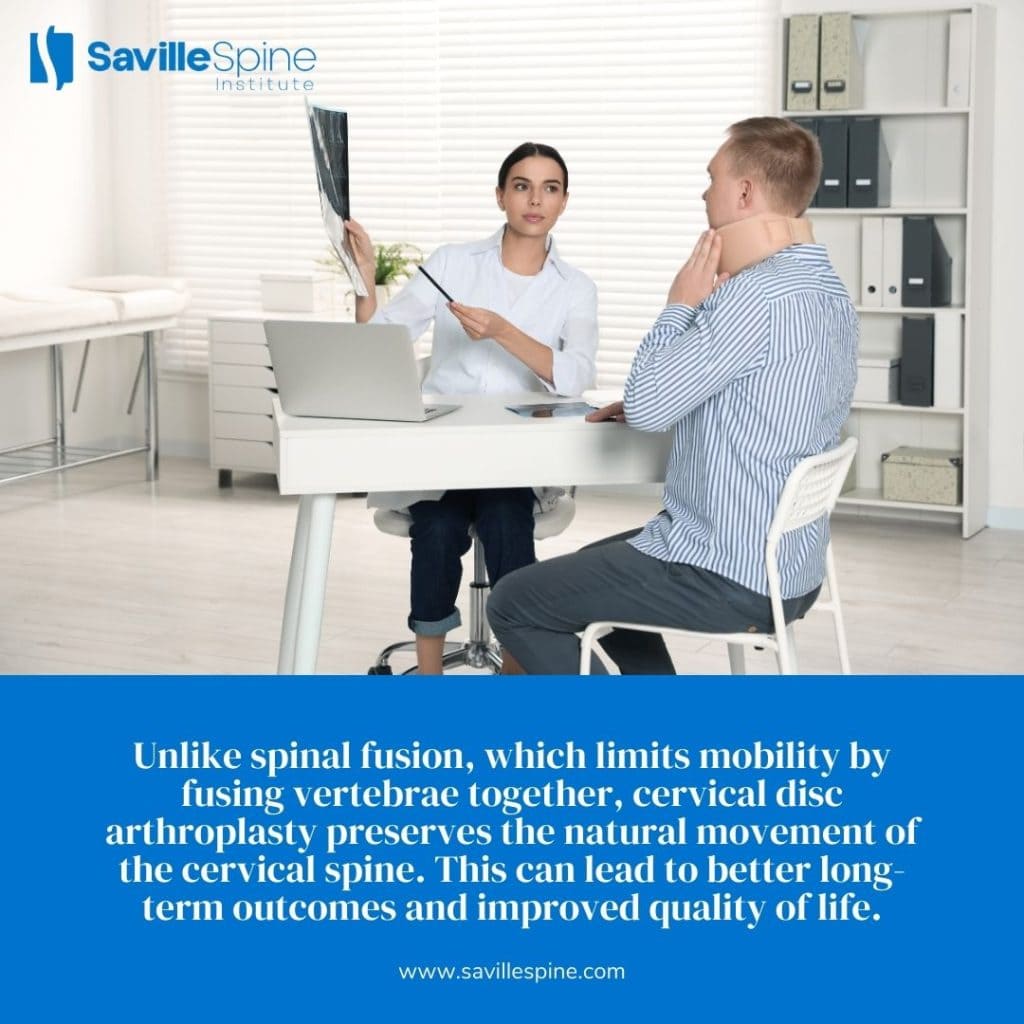
Unlike spinal fusion, which limits mobility by fusing vertebrae together, cervical disc arthroplasty preserves the natural movement of the cervical spine. This can lead to better long-term outcomes and improved quality of life.
Reduced risk of adjacent segment disease
Maintaining motion in the cervical spine reduces the stress placed on adjacent discs, lowering the risk of degeneration in nearby spinal segments.
Faster recovery time
Many patients experience quicker recovery times with cervical disc arthroplasty compared to spinal fusion. This means a faster return to work, hobbies, and daily activities.
Minimally invasive approach
The procedure is performed using a minimally invasive technique, which results in smaller incisions, less blood loss, and reduced postoperative pain. This approach can also lead to a quicker and seamless recovery for most patients.
Improved pain relief
Cervical disc arthroplasty is highly effective at relieving neck pain, arm pain, and other symptoms caused by nerve compression.
Experience Excellence in Cervical Disc Arthroplasty at Saville Spine Institute
When it comes to advanced spine care, trust and expertise are important. At Saville Spine Institute, we pride ourselves on delivering exceptional patient outcomes through cutting-edge techniques and personalized care.
Led by the renowned Dr. Saville, our team is dedicated to helping you reclaim a pain-free, active lifestyle with innovative treatments like the following minimally invasive spine surgery:
- Cervical disc replacement
- Herniated disc surgery
- Microdiscectomy
- Anterior cervical discectomy and fusion
- Cervical foraminotomy
- Lumbar decompression
- Lumbar fusions
- And more!
Whether you’re searching for a cervical disc replacement near me or the best concierge orthopedics services, our spine institute has got you covered.
Contact us today to schedule your consultation with Dr. Saville and discover why we’re the premier choice for spinal care.
The material contained on this site is for informational purposes only and DOES NOT CONSTITUTE THE PROVIDING OF MEDICAL ADVICE, and is not intended to be a substitute for independent professional medical judgment, advice, diagnosis, or treatment. Always seek the advice of your physician or other qualified healthcare providers with any questions or concerns you may have regarding your health.
