
The Benefits of Motion Preservation in Spinal Surgery
Spinal surgery has undergone significant advancements over the years. While traditional fusion techniques have helped many patients manage chronic spinal issues, advancements in technology and surgical methods have introduced motion-preserving procedures that offer new hope for patients. These techniques aim to maintain the natural movement of the spine, leading to better overall outcomes in many cases.
Let’s explore what motion preservation entails and the benefits it offers to patients, particularly in the context of motion preservation after spinal surgery.
What is Motion Preservation?
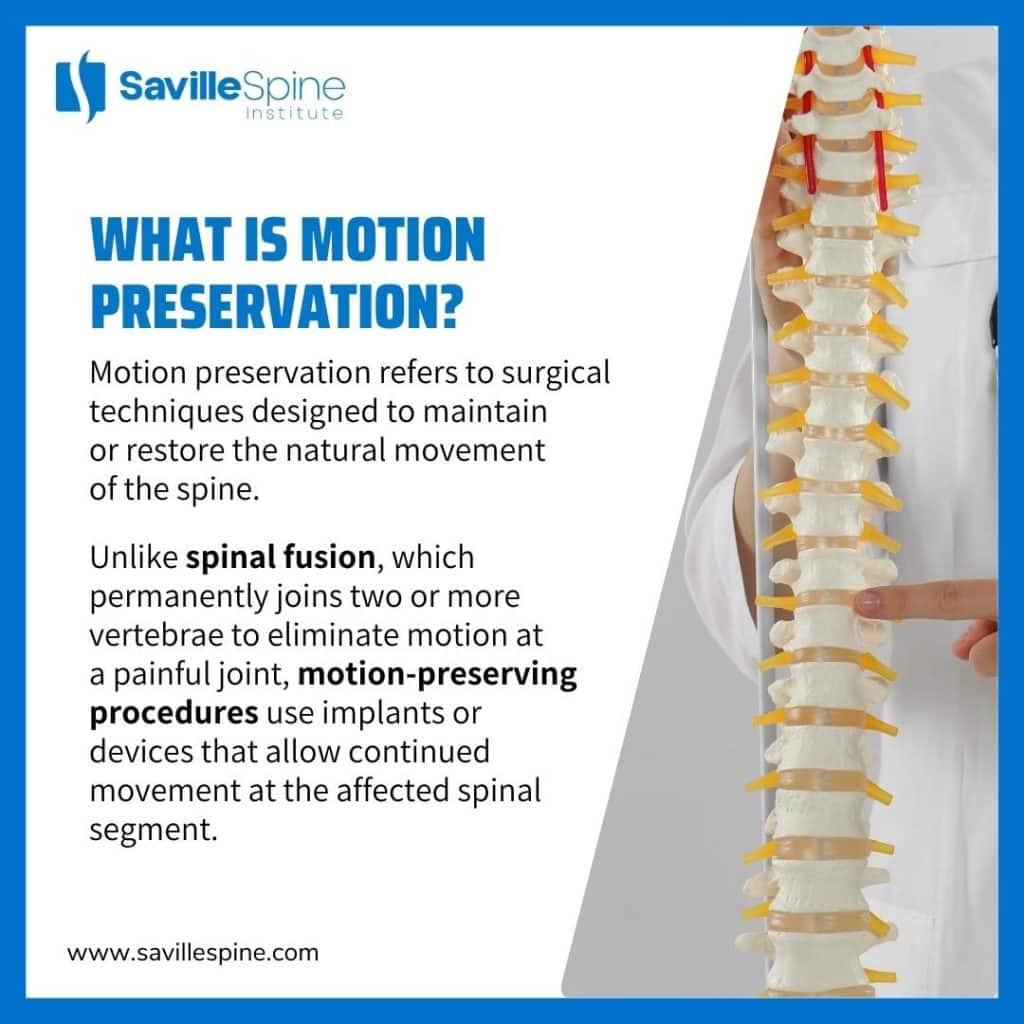
Motion preservation refers to surgical techniques designed to maintain or restore the natural movement of the spine. Unlike spinal fusion, which permanently joins two or more vertebrae to eliminate motion at a painful joint, motion-preserving procedures use implants or devices that allow continued movement at the affected spinal segment.
How Motion Preservation Differs from Traditional Spinal Fusion?
Motion preservation and spinal fusion are both effective surgical treatments for spinal conditions, but they differ significantly in their goals, techniques, and long-term outcomes.
Spinal Fusion
Spinal fusion involves permanently joining two or more vertebrae to eliminate movement at a problematic spinal segment. This procedure is effective for stabilizing the spine and alleviating pain, particularly in cases of severe degeneration, instability, or deformity. However, because it restricts motion at the fused segment, it can increase stress on adjacent vertebrae, potentially leading to complications such as Adjacent Segment Degeneration (ASD) in the future.
Motion Preservation
On the other hand, motion preservation techniques—such as artificial disc replacement for an active lifestyle or dynamic stabilization—aim to treat spinal issues while preserving the spine’s natural range of motion. Instead of fusing the vertebrae, these procedures use advanced implants that allow continued movement at the treated segment. This not only helps maintain overall spinal function but also reduces stress on neighboring vertebrae, leading to a quicker recovery and a more active lifestyle.
In summary, motion preservation, an innovative alternative to spinal fusion, focuses on maintaining spinal movement, while fusion aims to stabilize and limit motion at the affected segment.
Key Benefits of Motion Preservation
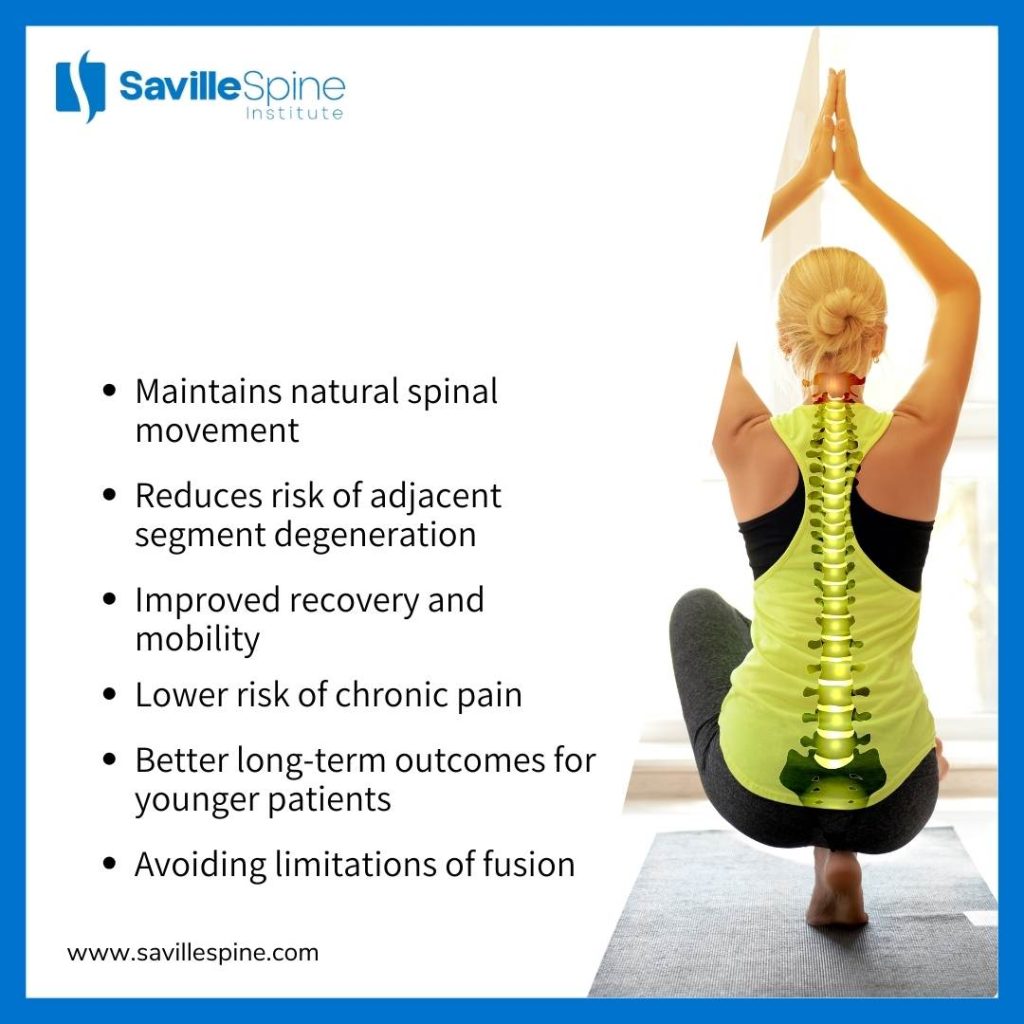
Motion preservation offers several significant benefits, including:
Maintains Natural Spinal Movement
The most apparent benefit of motion-preserving surgery is that it allows the spine to move naturally. This can lead to a more normal range of motion post-surgery, making everyday tasks like bending, turning, and twisting feel more natural.
Reduces Risk of Adjacent Segment Degeneration
Spinal fusion can sometimes increase stress on the vertebrae above and below the fused segment, leading to adjacent segment degeneration (ASD). By preserving motion, these stresses are minimized, reducing the likelihood of future spinal problems.
Improved Recovery and Mobility
Many patients experience quicker recovery times with motion-preserving techniques compared to fusion. Because the spine isn’t immobilized, patients may return to their regular activities sooner and with fewer physical limitations.
Lower Risk of Chronic Pain
Fusion surgery can occasionally result in long-term stiffness or pain due to limited range of motion. By preserving mobility, patients are often less likely to develop chronic postoperative discomfort.
Better Long-Term Outcomes for Younger Patients
Younger, more active patients tend to benefit significantly from motion-preserving procedures. They’re often able to maintain a higher quality of life and continue participating in sports, physical activities, or demanding jobs.
Avoiding Limitations of Fusion
Fusion is a valuable procedure, but it’s not always ideal. In some instances—especially when only one disc or joint is affected—motion-preserving surgery can address the issue without permanently limiting movement.
Common Motion Preservation Techniques
Motion-preserving spinal surgery utilizes advanced technologies to maintain or restore the natural movement of the spine. Here are three of the most common techniques:
Artificial Disc Replacement (ADR)
Artificial disc replacement involves removing a damaged or degenerated spinal disc and replacing it with an artificial disc made of metal, plastic, or a combination of materials. The artificial disc mimics the function and movement of a natural disc, allowing the spinal segment to retain flexibility and motion. ADR is most commonly performed in the cervical (neck) and lumbar (lower back) regions and is ideal for patients with disc-related pain who want to avoid fusion.
Dynamic Stabilization Devices
Dynamic stabilization systems are implanted to support the spine while still allowing controlled movement. These devices typically consist of flexible rods, cords, or springs that stabilize the spinal segment without rigidly locking it in place like traditional fusion hardware. They help reduce abnormal motion and pain while preserving some degree of flexibility, especially in patients with moderate spinal instability or early degenerative changes.
Facet Joint Replacement
The facet joints, located at the back of the spine, help control movement and provide stability. When these joints become arthritic or damaged, they can cause significant pain and limit motion. Facet joint replacement involves removing the damaged joints and replacing them with artificial components that restore natural motion and alleviate pain. This technique is less common than ADR but is gaining interest as technology and implant design improve.
Each of these motion preservation methods is tailored to address specific spinal conditions while prioritizing mobility, function, and long-term spine health. The choice of technique depends on the patient’s anatomy, the level of spinal degeneration, and overall treatment goals.
Who is a Candidate for Motion Preservation?
Not every patient is a candidate for motion preservation surgery. Ideal candidates typically:
- Have localized disc or joint degeneration
- Are in overall good health
- Are younger or have a high activity level
- Have no severe spinal instability or deformity
A thorough evaluation by a spine specialist, including imaging, physical examinations, and a review of symptoms, is necessary to determine the best surgical approach.
Ready to Explore the Benefits of Motion Preservation for Your Spine?
At Saville Spine Institute, our expert surgeons specialize in motion-preserving procedures that restore mobility and reduce pain. Whether you’re dealing with disc degeneration or other spinal conditions, we provide personalized care through our exclusive concierge orthopedics services, ensuring that your treatment is tailored to your unique needs. If you’re looking for Palm Beach Gardens motion preservation options, we’re here to help you regain a pain-free lifestyle.
We also offer a range of advanced procedures, including:
Looking for an exceptional spine institute in Florida? Saville Spine Institute is here to help. Reach out today to schedule your consultation for spinal surgery and discover how motion preservation can enhance your quality of life.
***
The material on this site is for informational purposes only and DOES NOT CONSTITUTE THE PROVIDING OF MEDICAL ADVICE, and is not intended to be a substitute for independent professional medical judgment, advice, diagnosis, or treatment. Always seek the advice of your physician or other qualified healthcare provider with any questions or concerns you may have regarding your health.
