
Managing Pain & Recovery After MIS Spine Surgery
Are you or someone you love preparing for or recovering from minimally invasive spine surgery? If so, you likely know that this type of surgery can be life-changing, offering relief from debilitating pain and restoring functionality. However, the healing process can also be challenging and may require some strategic pain management techniques.
In this blog post, we will discuss the ins and outs of managing pain and optimizing recovery after MIS spine surgery, as well as provide valuable tips and information to help you navigate this journey with ease. From understanding the procedure itself to incorporating self-care practices, you can trust this guide to be your go-to resource for a successful and smooth recovery. So, let’s dive in and discover how to effectively manage pain and achieve a full recovery after MIS spine surgery.
What is MIS Spine Surgery?
MIS spine surgery, also known as Minimally Invasive Spine Surgery, is a surgical approach used to treat conditions affecting the spine and spinal cord. It involves the use of specialized techniques and tools to minimize the need for large incisions and muscle disruption, resulting in a faster recovery and less post-operative pain for the patient.
Traditional spine surgery, on the other hand, involves a large incision and extensive muscle dissection, which can result in a longer hospital stay and a more painful recovery. MIS techniques allow surgeons to access and treat the spine through smaller incisions, reducing the trauma to the surrounding tissues and resulting in better outcomes for patients.
What are the Benefits of MIS Spine Surgery?
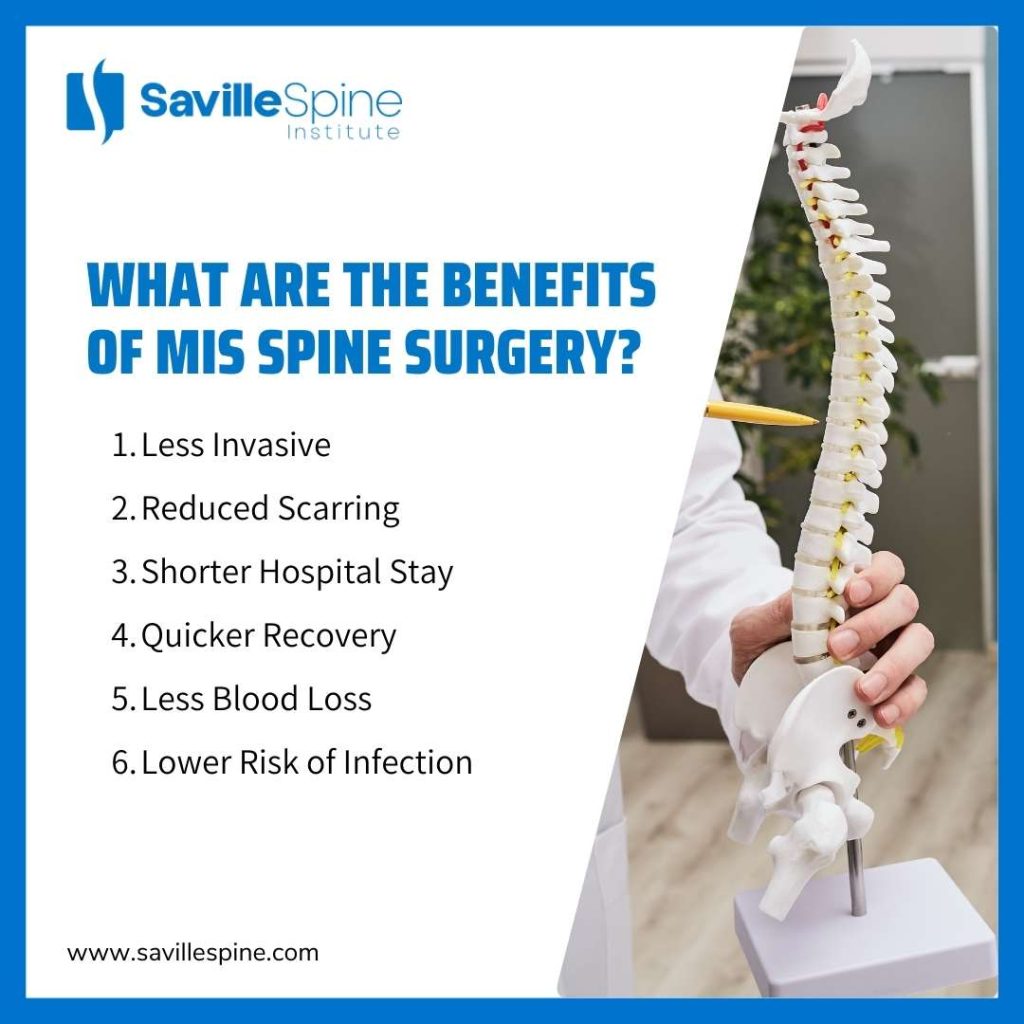
Let’s take a closer look at the benefits of MIS spine surgery and why it has become the preferred option for treating various spine conditions.
- Less Invasive
As the name suggests, MIS spine surgery is less invasive than traditional open surgery. Smaller incisions are made, and there is less tissue disruption, resulting in less trauma to the body. This leads to a faster recovery and less post-operative pain.
- Reduced Scarring
With traditional spine surgery, a large incision is made, resulting in a bigger scar. MIS spine surgery involves making small incisions, resulting in smaller scars that are less noticeable. This can be especially beneficial for those who are conscious about their appearance.
- Shorter Hospital Stay
Due to less tissue disruption and complications, MIS spine surgery typically requires a shorter hospital stay compared to traditional surgery. Patients can often return home the same day or within a day or two after the surgery. This means less time spent in the hospital and a faster return to normal activities.
- Quicker Recovery
One of the most significant advantages of MIS spine surgery is the faster recovery time. Patients can return to their regular activities within a few weeks, compared to several months with traditional spine surgery. This is due to the smaller incisions, less tissue damage, and reduced risk of complications.
- Less Blood Loss
MIS spine surgery involves smaller incisions, which results in less blood loss during the procedure. This can be especially beneficial for patients with certain medical conditions that affect their blood’s ability to clot.
- Lower Risk of Infection
Large incisions in traditional spine surgery can make patients more prone to infections, as they provide a direct pathway for bacteria to enter. With MIS spine surgery, the incisions are smaller, reducing the risk of infection.
Managing Pain After MIS Spine Surgery
Despite its minimally invasive approach, spine surgery is still a major operation, and it is normal to experience some level of pain and discomfort after the procedure. However, the good news is that MIS spine surgery typically results in less pain compared to traditional surgery, making the recovery process more manageable for patients.
Here are some tips on managing pain after MIS spine surgery:
- Follow Your Doctor’s Instructions
One of the most important things you can do to manage post-operative pain is to follow your doctor’s post-operative instructions carefully. This may include taking prescribed medications, applying ice packs, and avoiding specific activities during the recovery period.
- Use Pain Medications
Your doctor may prescribe pain medications to help manage post-operative pain. Non-steroidal anti-inflammatory drugs (NSAIDs) can help reduce inflammation and alleviate pain. Make sure to take these medications as directed and do not exceed the recommended dosage.
- Stay Active
Although it may be tempting to rest and avoid any physical activity, staying active is crucial for a speedy recovery. However, engage in low-impact activities and avoid strenuous activities that can put a strain on your spine. Consider physical therapy to help strengthen your muscles and improve flexibility, which can aid in pain management.
- Practice Good Posture
Proper posture is essential for maintaining a healthy spine. After surgery, try to avoid any activities that require you to twist or bend your spine. Make sure to sit and stand in a neutral position, with your shoulders relaxed and your feet flat on the ground.
- Take Care of Your Incision Site
It is important to keep your incision site clean and protected. Make sure to dress the wound as per your doctor’s instructions to prevent any infections.
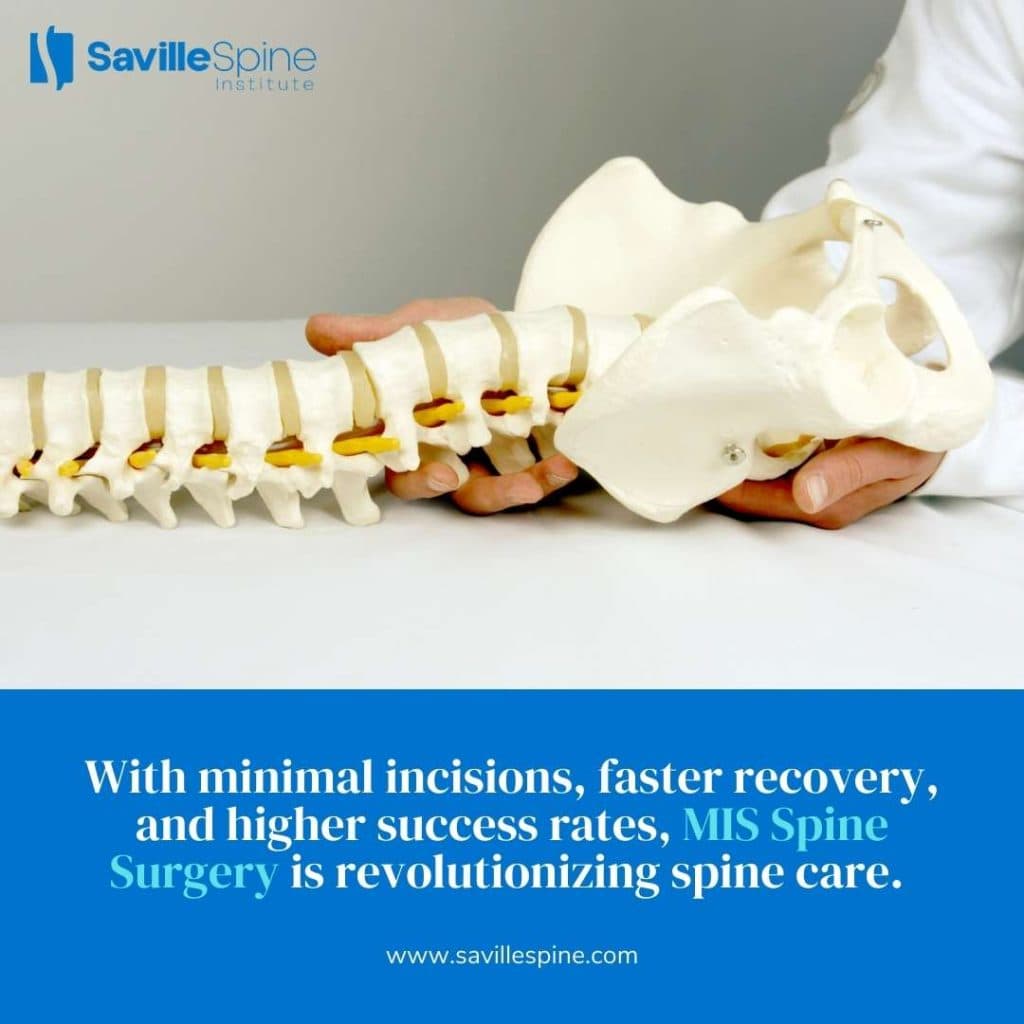
Conditions Treated with MIS Spine Surgery
MIS spine surgery is used to treat a wide range of spinal conditions, including:
- Herniated Disc
A herniated disc occurs when the soft inner material of a spinal disc pushes through a crack in the tough outer layer, causing pressure on the nerves. MIS spine surgery can be used to remove the damaged part of the disc and relieve the pressure on the nerves.
- Spinal Stenosis
Spinal stenosis is a narrowing of the spinal canal, which puts pressure on the spinal cord and nerves. MIS spine surgery can be used to remove the bone or tissue that is causing the narrowing, relieving the pressure on the spinal cord and nerves.
- Scoliosis
MIS spine surgery can be used to treat scoliosis, a condition that causes an abnormal curvature of the spine. It involves using specialized instruments to correct the curvature and stabilize the spine.
- Spinal Fusion
Spinal fusion is a procedure to join two or more vertebrae together to stabilize the spine. MIS spine surgery can be used to carry out this procedure, resulting in a faster recovery and less post-operative pain compared to traditional fusion surgery.
Experience Exceptional Spine Care with Saville Spine Institute
For top-notch spine care, choose Saville Spine Institute. Your spine is the cornerstone of your body’s structure, and it’s essential to prioritize its health and well-being. Don’t overlook any indications of spine-related problems. Instead, seek out a reliable and respected specialist and institute for optimal care.
Dr. Philip Saville is a top-rated and certified spine surgeon in Palm Beach Gardens. He specializes in minimally invasive spine surgery and motion-preserving procedures such as cervical and lumbar disc replacements. Patients have found that Dr. Saville’s expertise in these techniques results in less surgical damage, faster recovery, and better overall results.
If you are experiencing severe discomfort or pain due to a spine condition and you’re looking for a trusted “spine institute near me”, look no further than Saville Sine Institut.
Our team of experts and concierge orthopedics physicians will work with you to create a personalized treatment plan that will help you get back to living life to the fullest. Choose Saville Spine Institute for a pain-free future with options like microdiscectomy and spine arthroplasty available for your specific needs.
Contact us today to schedule a consultation and take the first steps towards a healthier spine.
***
The material on this site is for informational purposes only and DOES NOT CONSTITUTE THE PROVIDING OF MEDICAL ADVICE, and is not intended to be a substitute for independent professional medical judgment, advice, diagnosis, or treatment. Always seek the advice of your physician or other qualified healthcare provider with any questions or concerns you may have regarding your health.
