
What To Expect After Minimally Invasive Spine Surgery?
Minimally invasive spine surgery has revolutionized the treatment of spinal conditions, offering patients a less invasive option with potentially shorter recovery times. However, understanding what to expect after undergoing such a procedure is crucial for a smooth recovery journey.
In this comprehensive guide, we’ll explore the various stages of recovery, from the immediate post-surgery period to long-term expectations, providing valuable insights and tips for navigating each phase effectively.
What is minimally invasive spine surgery?
Minimally invasive spine surgery is a surgical technique used to treat various spinal conditions with minimal disruption to surrounding tissues.
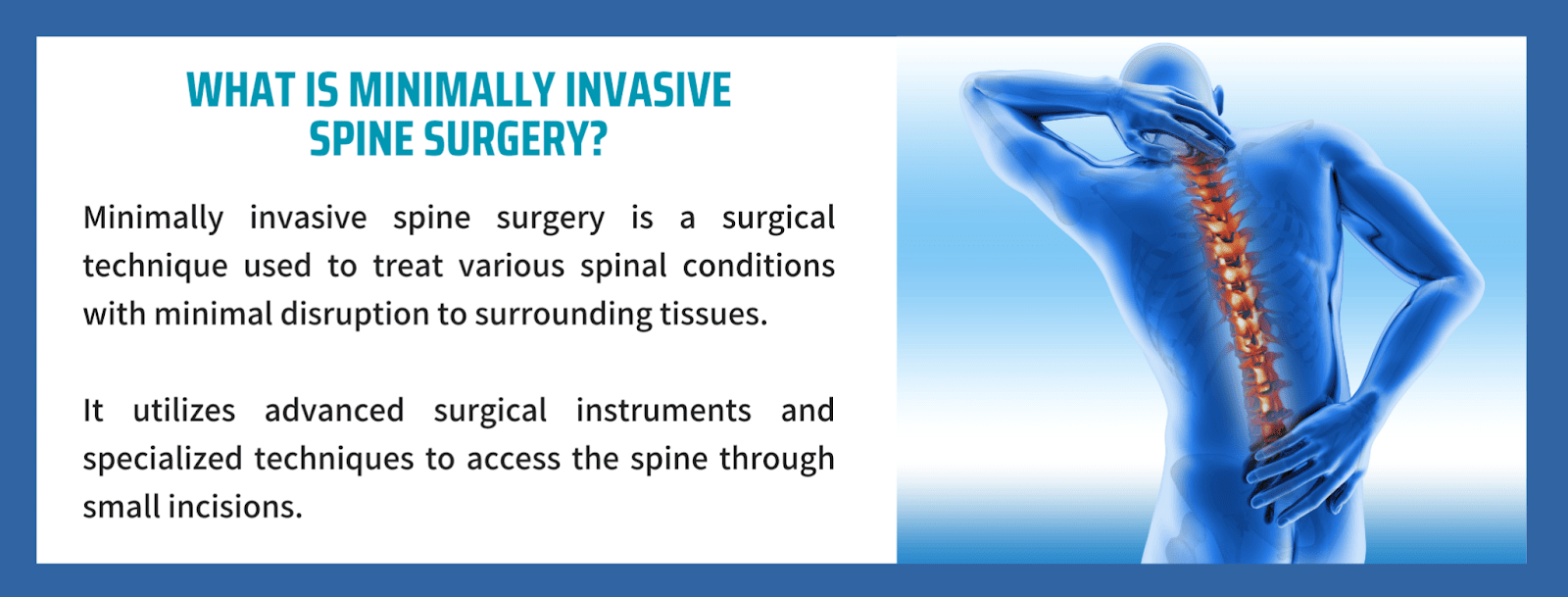
Unlike traditional open surgery, which involves large incisions and significant muscle dissection, minimally invasive surgery utilizes advanced surgical instruments and specialized techniques to access the spine through small incisions.
Minimally invasive spine surgery may be used to treat various spinal conditions, including
- Herniated discs
- Spinal stenosis
- Degenerative disc disease
- Spinal fractures
- Spinal tumors
However, not all patients or conditions are suitable for minimally invasive approaches, and the decision to undergo this type of surgery should be made in consultation with a qualified spine surgeon based on individual circumstances and treatment goals.
What happens right after the surgery?
After undergoing minimally invasive spine surgery, you’ll transition into the immediate post-surgery period, during which your body begins the initial stages of recovery. Here’s what you can expect during this critical phase:
- Recovery room monitoring
Following the completion of your surgery, you’ll be transferred to a recovery area, where you’ll be closely monitored by healthcare professionals. Vital signs such as heart rate, blood pressure, and oxygen levels will be closely observed to ensure stability and safety.
- Waking up from anesthesia
As the effects of anesthesia begin to wear off, you’ll gradually regain consciousness. It’s normal to feel dizzy, disoriented, or nauseous immediately after surgery, but these symptoms typically subside as you fully awaken.
- Pain management
Your medical team will assess your pain levels and administer appropriate pain management medications to help alleviate discomfort. This may include intravenous (IV) pain medications initially, which can be adjusted based on your individual needs and response.
- Assessment of surgical site
Your doctor will carefully assess the surgical site for any signs of bleeding, swelling, or other complications. Dressings or bandages may be applied to the incision site to promote healing and reduce the risk of infection.
- Fluid intake and mobility
Once fully awake and stable, you’ll be encouraged to sip water and gradually transition to a regular diet as tolerated.
Depending on your surgeon’s recommendations and specific procedure, you may be encouraged to start moving and walking with assistance to promote circulation and prevent complications such as blood clots.
How long will you stay in the orthopedic facility?
The length of your hospital stay following minimally invasive spine surgery will vary depending on several factors (e.g., type of procedure performed, the overall health of the patient).
However, most patients may stay in the hospital for one to three days following minimally invasive spine surgery. However, some may be discharged on the same day or require a longer hospitalization for closer monitoring or additional care.
What to expect during the recovery and rehabilitation?
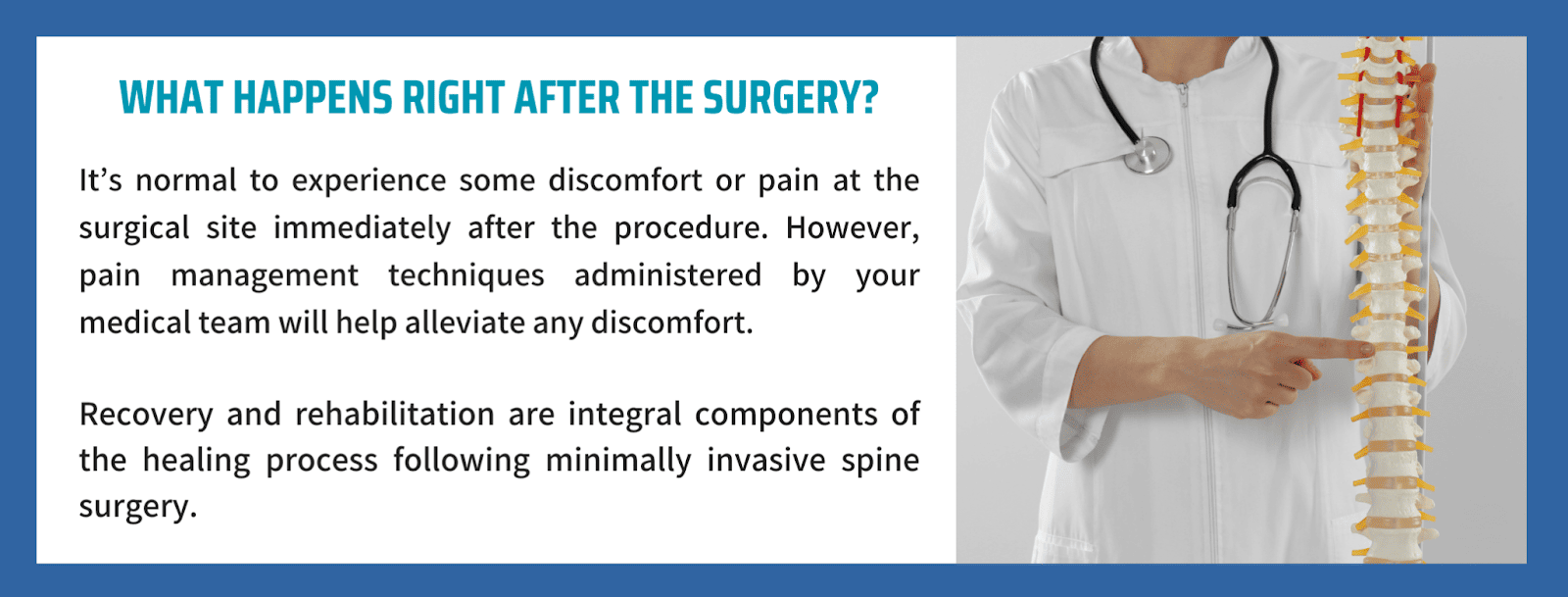
Recovery and rehabilitation are integral components of the healing process following minimally invasive spine surgery. Here’s what you can expect as you progress through the postoperative period:
Early recovery phase
- As you transition from the immediate post-surgery period to the early recovery phase, you’ll begin to regain consciousness fully. Your medical team will encourage you to start moving and walking as soon as possible, as mobility is crucial for preventing complications such as blood clots and muscle stiffness.
- While you may experience some pain or discomfort during this phase, it’s essential to follow your prescribed pain management regimen and communicate any concerns with your healthcare provider.
- Additionally, you may be given specific instructions regarding wound care and medication management to promote healing and minimize the risk of infection.
Rehabilitation program
- Participating in a structured physical therapy program is essential for restoring strength, flexibility, and mobility after spine surgery.
- Your physical therapist will design a personalized exercise program tailored to your specific needs and goals, focusing on core stabilization, posture correction, and functional movements.
- Some examples of exercises that may be included in the program are gentle stretching, resistance training, core strengthening, functional exercises, and balance training.
- In addition to physical therapy exercises, your rehabilitation program may include education on proper body mechanics, ergonomics, and strategies for preventing future spine problems.
Long-term recovery and maintenance
- As you progress through your rehabilitation program, you’ll gradually return to your normal activities and daily routine. It’s important to listen to your body and progress at a comfortable and manageable pace.
- Follow-up appointments with your surgeon are essential for monitoring your progress and addressing any concerns or complications that may arise.
- Your surgeon may recommend periodic imaging studies, such as X-rays or MRI scans, to assess the healing process and ensure the long-term success of your surgery.
Where to find the best spine institute in Florida?

At Saville Spine Institute, we redefine excellence in minimally invasive spine surgery, offering cutting-edge treatments and compassionate care to patients seeking relief from spinal conditions. Our board-certified surgeon, Dr. Philip Saville, specializes in the following procedures:
- Lumbar microdiscectomy
- Minimally invasive lumbar decompression
- Cervical disc replacement
- Lumbar disc arthroplasty
- And more
Whether you’re seeking treatment for an orthopedic condition or looking for a concierge orthopedics service, we’ve got you covered.
Experience the difference that expert care and advanced technology can make at Saville Spine Institute. Schedule your consultation today and take the first step toward a healthier, happier you.
The material contained on this site is for informational purposes only and DOES NOT CONSTITUTE THE PROVIDING OF MEDICAL ADVICE, and is not intended to be a substitute for independent professional medical judgment, advice, diagnosis, or treatment. Always seek the advice of your physician or other qualified healthcare providers with any questions or concerns you may have regarding your health.
