
Like a pebble in your shoe, a pain in the neck can be irritating. Neck pain can change everything about your life. It makes simple things—driving, working, even just looking down at your phone—feel harder than they should. When therapy, medication, or injections don’t give relief anymore, surgery often becomes the next step. Two of the most common options are cervical disc replacement and spinal fusion. Both can help, but they work in very different ways.
At the Saville Spine Institute in Palm Beach Gardens, the team of Dr. Philip Saville, Dr. Lawrence Gorfine, and Dr. Jason Meldau has helped countless patients find real answers. What makes them different is that they don’t just recommend one solution—they take time to look at your specific problem, your goals, and your lifestyle to guide you toward the option that fits best.
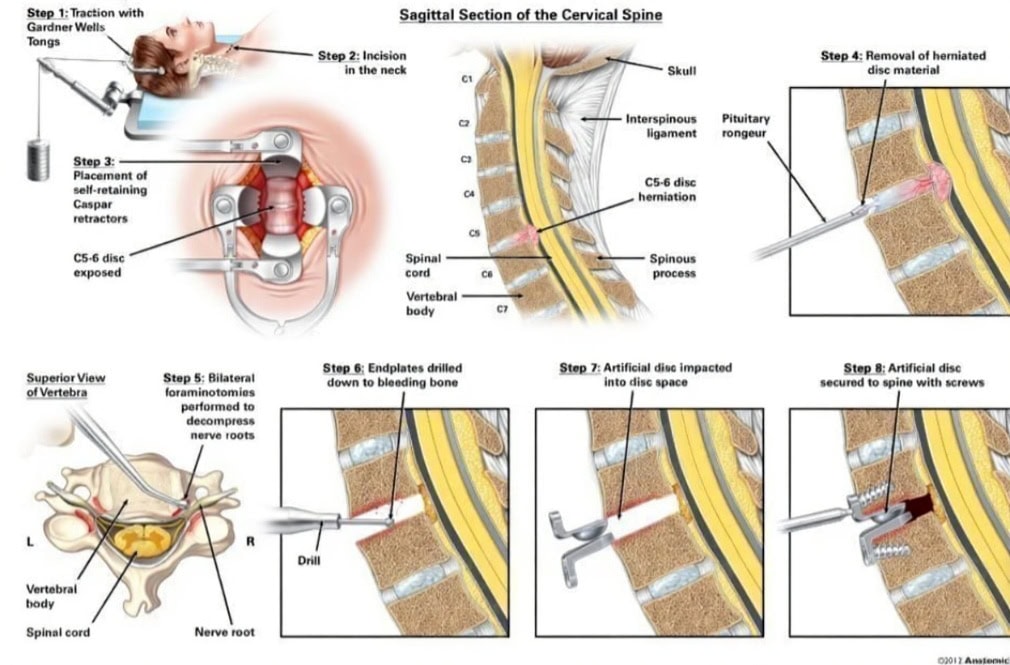
Cervical Disc Replacement: Keeping Motion
With cervical disc replacement, a damaged disc in the neck is removed and replaced with an artificial one. The new disc is designed to move and function like a natural disc, which means your neck can still bend and turn normally.
The big advantages are:
- You keep your range of motion.
- Recovery is usually faster than with fusion.
- There’s less stress on the other discs in your spine.
- For many patients, there’s a lower chance of needing another surgery down the road.
This approach is often best for people who want to stay active, especially younger patients who have only one or two damaged discs.
Spinal Fusion: Stability Above All
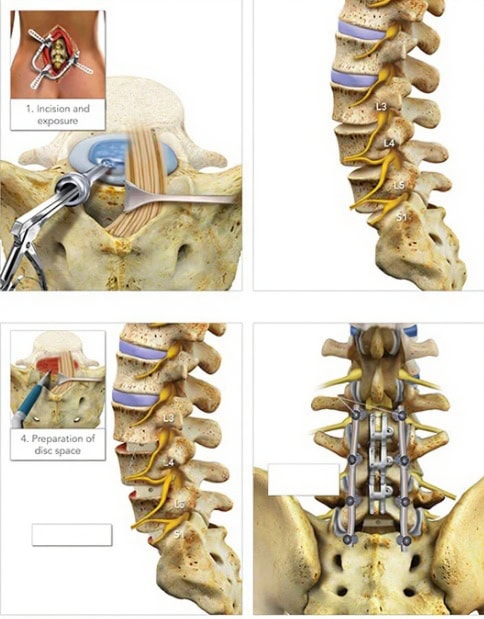
Spinal fusion is different. Instead of replacing the disc, the surgeon removes it and permanently fuses two vertebrae together. Metal hardware and bone grafts create one solid unit. The main goal is to stop the painful movement in that part of the spine.
The benefits are clear:
- It gives strong, lasting stability.
- It’s a proven option for people with arthritis, deformities, or more complex problems.
- It can be the right choice when more than one disc is affected.
The tradeoff is that fusion takes away motion at that level of your neck. Over time, this can put extra stress on the discs above and below the fusion.
Cervical Disc Replacement vs Fusion: How Do You Decide?
The choice often comes down to your condition and what matters most to you.
- If you want to keep as much natural motion as possible and you’re a candidate, disc replacement may be the way to go.
- If stability is your top priority and you have multiple levels involved, fusion may be the better option.
Here’s a quick way to compare:
| Factor | Disc Replacement | Fusion |
| Motion | Preserved | Lost at fused level |
| Recovery | Typically quicker | Longer |
| Stress on Other Discs | Less | More |
| Best For | Active patients with limited disc damage | Complex, multi-level issues |

Why Experience Matters
When you’re facing a decision like this, having the right team makes all the difference.
- Dr. Philip Saville, MD, is known for his skill in motion-preserving spine surgery, with advanced training in minimally invasive disc replacement.
- Dr. Lawrence Gorfine, MD, brings more than 25 years of expertise in anesthesiology and pain medicine, ensuring patients get the best care before, during, and after surgery.
- Dr. Jason Meldau, MD offers both non-surgical treatments and advanced surgical techniques, giving patients options tailored to their needs.
Together, the team at Saville Spine Institute brings knowledge, compassion, and years of experience to every patient they see.


The Bottom Line
Choosing between cervical disc replacement and spinal fusion isn’t easy. Each option has clear benefits, but the right one depends on your diagnosis, your lifestyle, and your long-term goals. What matters most is having a surgeon who listens and helps you understand every step of the process.
At Saville Spine Institute in Palm Beach Gardens, you’ll find that kind of care. Whether it’s minimally invasive spine surgery, motion-preserving procedures, or expert pain management, their team is committed to helping you get back to living without constant neck pain.