
Three Major Types of Spinal Disorders
The human spine is a complex and vital structure that plays a crucial role in everyday activities. However, certain spinal disorders can significantly impact our quality of life.
This blog will discuss the three major types of spinal disorders and their symptoms, causes, and treatment options. If you or a loved one is experiencing any of these conditions, the Saville Spine Institute is here to help.
What is a Spinal Disorder?
A spinal disorder is any condition that affects the spine or surrounding structures, including bones, nerves, and ligaments. These disorders can affect people of all ages and can be congenital (present at birth) or acquired (developed later in life). The most common causes of spinal disorders include degenerative changes, deformities, and trauma.
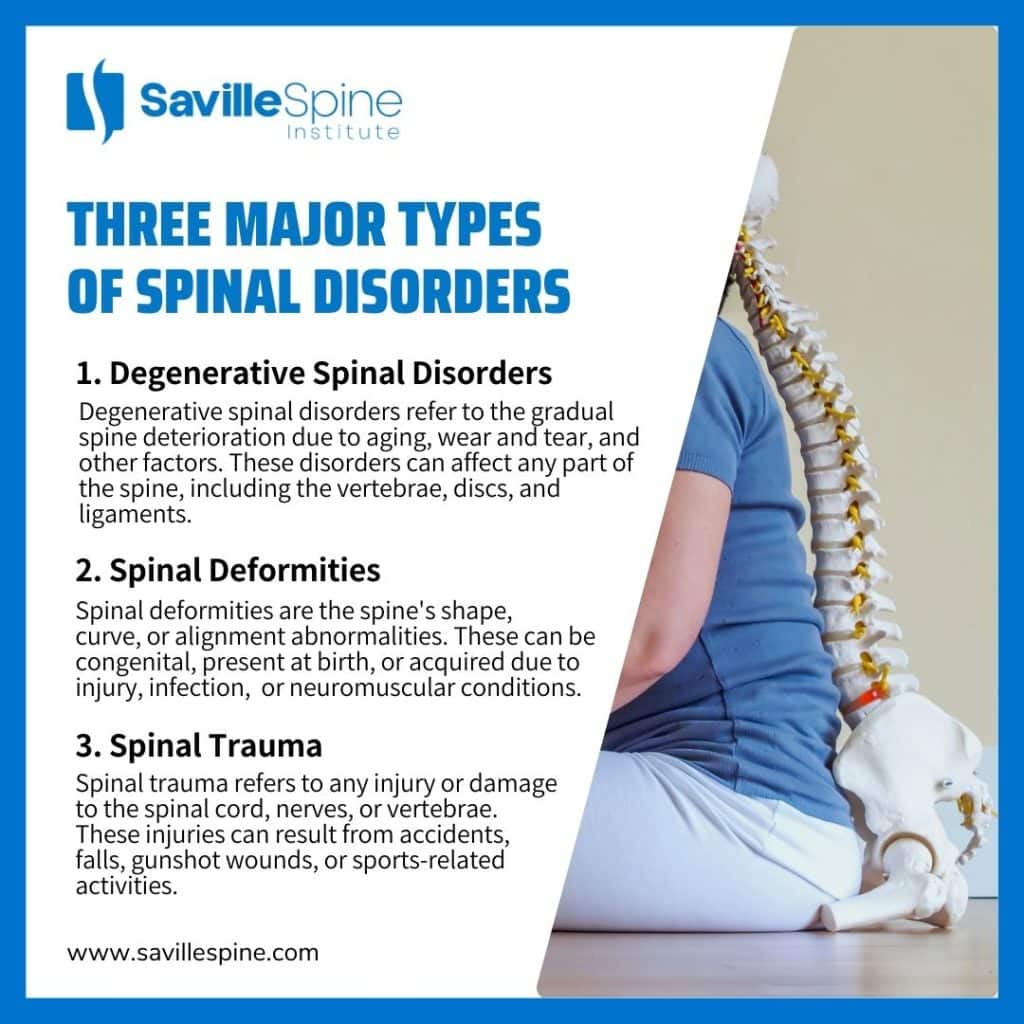
Type 1: Degenerative Spinal Disorders
Degenerative spinal disorders refer to the gradual spine deterioration due to aging, wear and tear, and other factors. These disorders can affect any part of the spine, including the vertebrae, discs, and ligaments. The most common degenerative spinal disorders are osteoarthritis, spinal stenosis, and degenerative disc disease.
Symptoms:
The symptoms of degenerative spinal disorders vary depending on the affected area. However, some common symptoms include:
- Chronic back pain
- Neck pain
- Numbness or weakness in the legs or arms
- Difficulty standing or walking
- Loss of bladder or bowel control
Causes:
Age is the primary factor contributing to degenerative spinal disorders. As we age, the discs in our spine lose their elasticity, decreasing flexibility and protective cushioning. Other factors that may increase the risk of degenerative spinal disorders include genetics, obesity, and occupational hazards.
Treatment:
Our team of expert spine surgeons at Saville Spine Institute offers various treatment options for degenerative spinal disorders. These may include physical therapy, medication, and minimally invasive surgery. We aim to provide personalized care to address each patient’s specific needs.
Type 2: Spinal Deformities
Spinal deformities are the spine’s shape, curve, or alignment abnormalities. These can be congenital, present at birth, or acquired due to injury, infection, or neuromuscular conditions. The most common spinal deformities are scoliosis, kyphosis, and lordosis.
Symptoms:
The symptoms of spinal deformities depend on the condition’s type, severity, and location. In some cases, deformities may not cause any symptoms, while others may experience:
- Visible curvature of the spine
- Uneven hips, shoulders, or ribcage
- Back pain
- Difficulty breathing
Causes:
The exact causes of spinal deformities are unknown. However, it is believed that both genetic and environmental factors may play a role. Congenital deformities may occur due to abnormal development in the womb, while acquired deformities can develop due to poor posture, improper body mechanics, or injuries.
Treatment:
The treatment for spinal deformities typically depends on the severity and type of the condition. Mild cases may be treated with physical therapy, bracing, and lifestyle modifications. However, severe cases may require surgery. At Saville Spine Institute, we use advanced techniques, including minimally invasive procedures, to correct spinal deformities and improve patients’ quality of life.
Type 3: Spinal Trauma
Spinal trauma refers to any injury or damage to the spinal cord, nerves, or vertebrae. These injuries can result from accidents, falls, gunshot wounds, or sports-related activities. Spinal trauma can have a significant impact on a person’s physical, emotional, and social well-being.
Symptoms:
Spinal trauma can cause a wide range of symptoms, depending on the location and severity of the injury. Some common symptoms include:
- Paralysis
- Loss of sensation or movement
- Difficulty breathing
- Inability to control bladder or bowel
- Chronic pain
Causes:
High-impact accidents or injuries primarily cause spinal trauma. These may include:
- Car accidents
- Falls from a height
- Sports injuries
- Violence
Treatment:
The treatment for spinal trauma depends on the type and severity of the injury. Sometimes, non-surgical treatment methods such as rest, physical therapy, and medication may be sufficient. However, severe cases may require emergency surgery to stabilize the spine, followed by rehabilitation. At Saville Spine Institute, we have a team of highly skilled surgeons with extensive experience in treating spinal trauma.
Tips to Prevent Spinal Disorders
With the proper knowledge and preventative measures, it is possible to reduce the risk of developing spinal disorders. Here are some crucial tips to help prevent spinal disorders and maintain a healthy spine.
Maintain Good Posture:
Many spend hours sitting at a desk, hunched over a computer, or slouching on the couch, which can significantly strain our spine. To prevent this, it is essential to maintain good posture throughout the day. Make sure to sit up straight, with your shoulders back and your feet flat on the floor. Keep your weight evenly distributed when standing, and avoid slouching or leaning to one side.
Exercise Regularly:
Staying physically active is crucial for overall health, but it is especially beneficial for your spine. Regular exercise helps to strengthen the muscles that support your spine, making it less susceptible to injuries and disorders. In addition, it helps to maintain flexibility and mobility, which are essential for a healthy spine.
Lift Heavy Objects Properly:
Improper lifting techniques can cause significant damage to your spine. To prevent this, always bend at the knees, not the waist, when lifting objects. Keep your back straight and use your leg muscles to lift the weight rather than your back. Additionally, it is crucial to avoid twisting while lifting, as this can also put undue stress on your spine.
Avoid Prolonged Sitting:
Frequent breaks from sitting is essential, especially if you have a sedentary job. Use a standing desk, take short walks, and practice simple stretches throughout the day to keep your spine in good shape. If you have a long commute, try to get up and move around whenever possible to avoid prolonged sitting.
Maintain a Healthy Weight:
Carrying excess weight can put unnecessary pressure on your spine, leading to various health issues. It is essential to maintain a healthy weight to reduce the risk of developing spinal disorders. A balanced diet and regular exercise can help you achieve and maintain a healthy weight, reducing the strain on your spine and improving your overall health.
Quit Smoking:
Smoking is not only harmful to your overall health, but it can also have a significant impact on your spine. The nicotine and other chemicals in cigarettes are known to cause damage to the tissues and vertebrae in the spine, increasing the risk of spinal disorders. Quitting smoking is one of the best things you can do for your spine and overall health.
Practice Safe Sleeping Habits:
Sleeping on your stomach can strain your neck and back immensely, leading to pain and discomfort. The best sleeping position for your spine is on your side or your back, with a supportive pillow to align your head and neck. Also, invest in a comfortable and supportive mattress to help maintain the natural curve of your spine while you sleep.
Choose Saville Spine Institute for Expert Spine Treatment
At Saville Spine Institute, we understand the significant impact that spinal disorders can have on a person’s quality of life. If you or a loved one is experiencing symptoms of degenerative spinal disorders, spinal deformities, or spinal trauma, prompt medical attention is essential. As a trusted spine institute in Florida, we offer comprehensive care and personalized treatment plans for all spinal disorders.
Our facility is equipped with the latest technology, and we offer minimally invasive surgical options to reduce pain, scarring, and post-operative recovery time. Our concierge orthopedics services ensure that each patient receives individualized care and support throughout their treatment. We also offer personalized rehabilitation programs to assist with a smooth recovery.
If you’re looking for a facility that offers “herniated disc surgery near you,” our experienced team is committed to providing the best possible care for all patients, including those seeking microdiscectomy procedures. Contact us today to schedule a consultation and discover how we can help you achieve a pain-free life.
***
The material on this site is for informational purposes only and DOES NOT CONSTITUTE THE PROVIDING OF MEDICAL ADVICE, and is not intended to be a substitute for independent professional medical judgment, advice, diagnosis, or treatment. Always seek the advice of your physician or other qualified healthcare provider with any questions or concerns you may have regarding your health.
