
Cervical Disc Arthroplasty vs. Fusion Surgery: What’s the Difference?
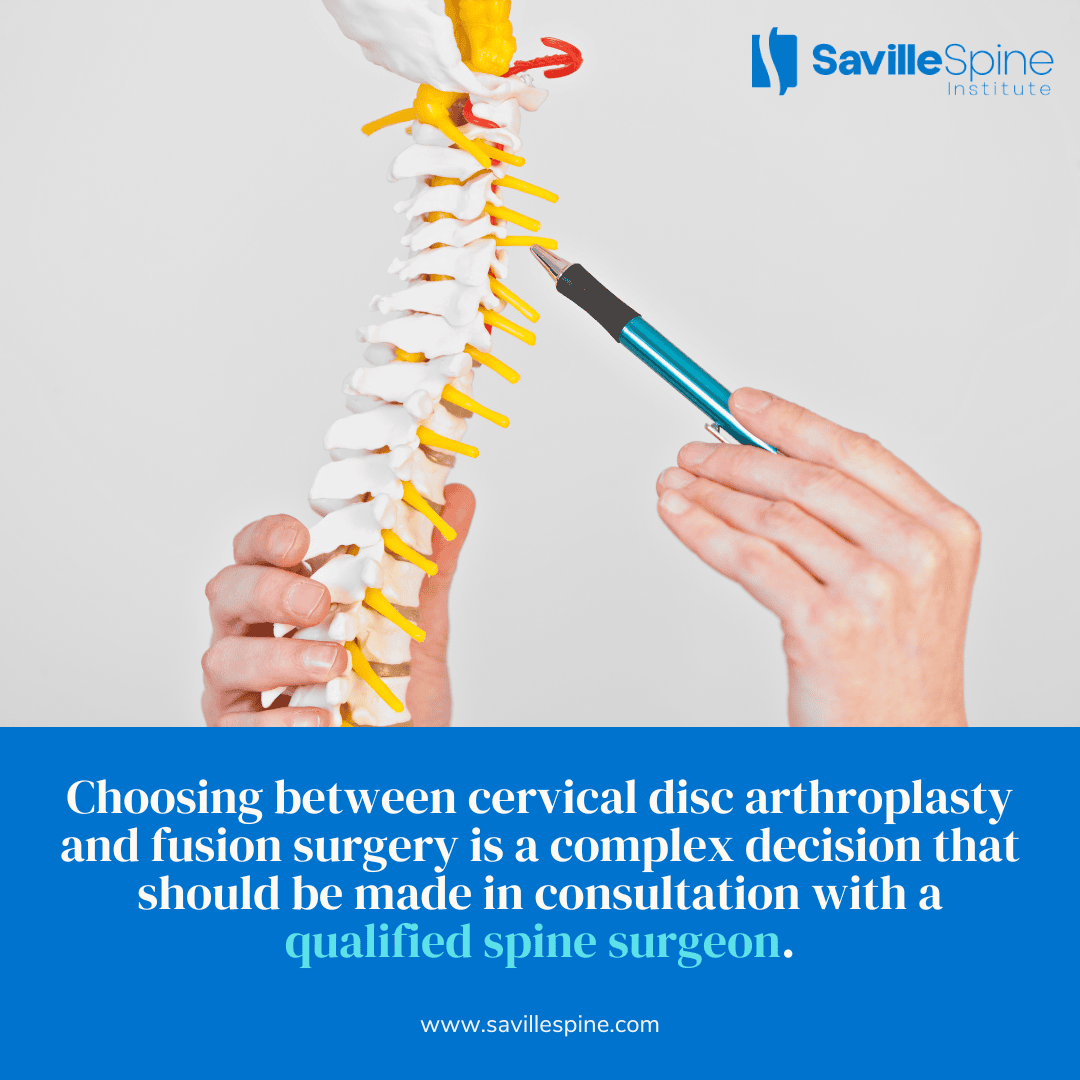
Neck pain is a common complaint afflicting millions worldwide. In many cases, it’s only a temporary annoyance. However, for some, the pain becomes chronic and debilitating, often stemming from issues with the cervical spine.
When conservative treatments like physical therapy and medication fail to provide relief, surgical intervention may be considered. Two primary surgical options for addressing cervical spine problems are cervical disc arthroplasty and cervical fusion surgery. But which one is right for you?
Let’s delve into the ins and outs of these procedures, exploring their mechanisms, benefits, and factors to consider when making a decision.
What are the common cervical spine problems?
The cervical spine is a complex structure situated at the top of the spinal column. It is made up of seven vertebrae separated by intervertebral discs. These discs act as shock absorbers, allowing for a range of motion in the neck. Common cervical spine problems include:
- Degenerative disc disease: Gradual breakdown of the intervertebral discs.
- Cervical disc herniation: Rupture of the disc material, leading to nerve compression.
- Cervical spinal stenosis: Narrowing of the spinal canal, putting pressure on the spinal cord.
What is cervical disc arthroplasty?
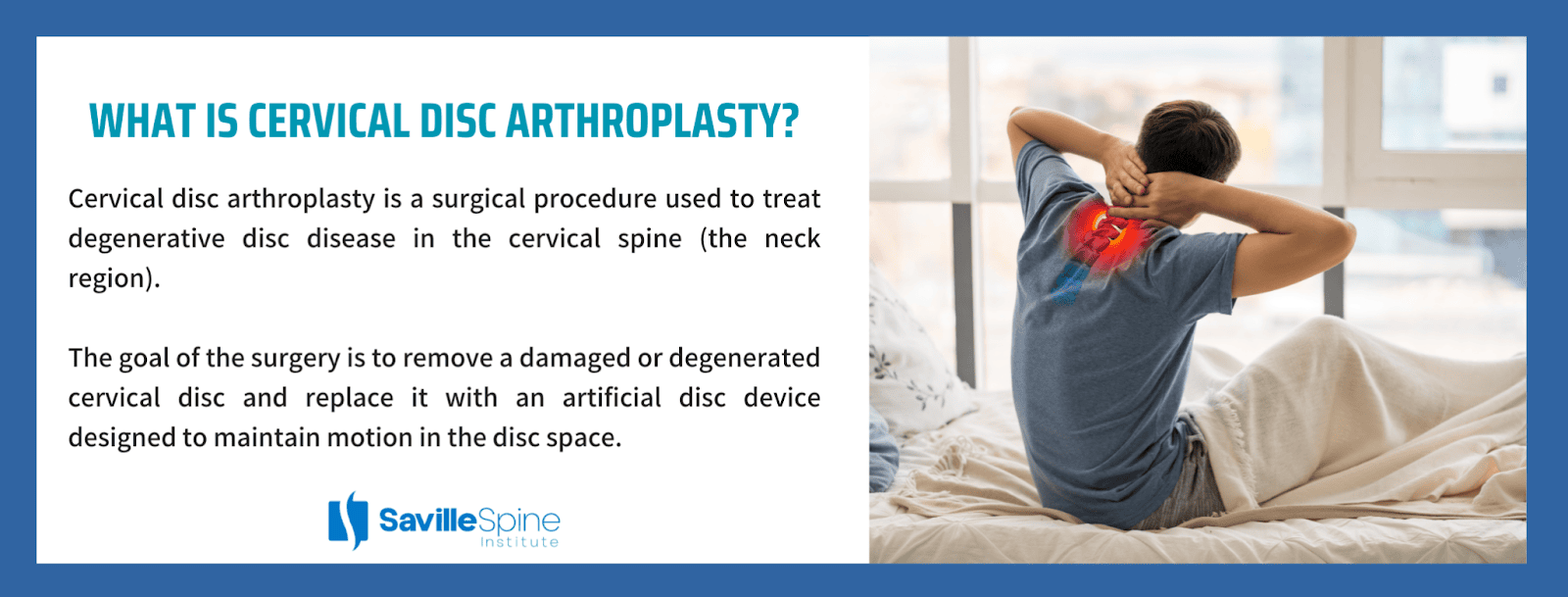
Cervical disc arthroplasty, also known as cervical disc replacement, is a surgical procedure used to treat degenerative disc disease in the cervical spine (the neck region).
The goal of the surgery is to remove a damaged or degenerated cervical disc and replace it with an artificial disc device designed to maintain motion in the disc space. It is typically recommended by an orthopedic specialist to:
- To relieve pain, numbness, and weakness caused by compressed nerves in the cervical spine.
- To preserve motion at the treated vertebral level, unlike traditional fusion surgery that immobilizes the segment.
How does it work?
During the procedure, the damaged disc is removed, and an artificial disc is inserted between the vertebrae. This implant is engineered to allow for flexion, extension, and rotation of the neck, similar to a natural disc.
What are the benefits of cervical disc arthroplasty
- Preserves natural neck movement and flexibility.
- Reduces the stress on adjacent discs, potentially lowering the risk of adjacent segment degeneration.
- Shorter recovery time and quicker return to normal activities.
What is cervical fusion surgery?
Cervical fusion surgery, also known as cervical spinal fusion, is a surgical procedure used to join two or more vertebrae in the cervical spine to stabilize the spine, alleviate pain, and prevent further damage. This procedure is typically performed to treat conditions that cause instability or severe pain in the neck.
Cervical fusion surgery is often considered when other treatments have failed to relieve symptoms or when the stability of the cervical spine is compromised.
It aims to provide pain relief and improve quality of life by stabilizing the spine, though it typically results in some loss of motion at the fused segments.
How does it work?
The damaged disc or bone is removed, and bone grafts (from the patient, a donor, or synthetic materials) are placed between the vertebrae.
Metal plates, screws, or rods may be used to hold the vertebrae together while the bone graft fuses the vertebrae over time. This graft, along with metal plates and screws, promotes bone fusion and stabilizes the spine.
What are the benefits of cervical fusion surgery?
- Stabilizes the spine, reducing pain and preventing further damage.
- Effective for conditions like severe degenerative disc disease, spinal instability, fractures, or deformities.
Arthroplasty vs fusion: Key differences
The primary distinction between cervical disc arthroplasty and fusion surgery lies in their impact on spinal motion.
Arthroplasty aims to preserve movement, while fusion eliminates it. This fundamental difference has significant implications for patient outcomes.
Preservation of motion
Arthroplasty allows for continued neck movement, which can improve quality of life, especially for younger, active patients. Fusion, on the other hand, results in a stiffer neck.
Recovery time
Patients undergoing arthroplasty often experience a faster recovery compared to those who undergo fusion.
Adjacent segment disease
While arthroplasty may reduce the risk of adjacent segment disease, the long-term evidence is still evolving. Fusion can increase the risk of developing problems in the spinal segments above and below the fused level.
Patient age and activity level
Younger, more active patients may be better candidates for arthroplasty, while older patients with more severe spinal degeneration might be more suitable for fusion.
How can you know the best surgical procedure for you?
Choosing between cervical disc arthroplasty and fusion surgery is a complex decision that should be made in consultation with a qualified spine surgeon. Several factors influence the optimal choice, including:
- Patient age and overall health: Younger, healthier patients may be better candidates for arthroplasty.
- The severity of spinal degeneration: Advanced bone-on-bone arthritis may favor fusion.
- Extent of nerve compression: The degree of pressure on the spinal cord or nerves will influence the surgical approach.
- Patient preferences and goals: Individual desires and expectations play a crucial role.
Cervical disc arthroplasty and cervical fusion surgery are both effective treatment options for cervical spine problems. However, they differ significantly in terms of their impact on spinal motion and recovery.
The ideal choice depends on various factors, including the patient’s age, overall health, and the specific condition being treated.
Saville Spine Institute: Your Path to Orthopedic Excellence
Are you living with chronic pain or limited mobility due to an orthopedic condition? If so, Saville Spine Institute is here to help. We are committed to providing exceptional orthopedic treatment and surgery tailored to your unique needs.
At the heart of our practice is Dr. Philip Saville, a renowned orthopedic specialist dedicated to delivering personalized care.
With his extensive expertise and compassionate approach, Dr. Saville meticulously assesses each patient’s condition to develop a customized treatment plan. Some of the treatment services we provide include:
- Minimally invasive spine surgery
- Cervical disc arthroplasty
- Concierge doctors in Palm Beach
- Lumbar microdiscectomy
- Lumbar disc arthroplasty
We understand that dealing with orthopedic issues can be challenging. That’s why we are committed to guiding you through every step of your journey. From diagnosis to treatment and rehabilitation, our dedicated team will be with you every step of the way.
Contact the best spine specialist near me today.
The material contained on this site is for informational purposes only and DOES NOT CONSTITUTE THE PROVIDING OF MEDICAL ADVICE, and is not intended to be a substitute for independent professional medical judgment, advice, diagnosis, or treatment. Always seek the advice of your physician or other qualified healthcare providers with any questions or concerns you may have regarding your health.
